24 Chinese Solar Terms

Track the 24 divisions of the solar year based on the Sun's ecliptic longitude.

Grain in Ear

Current Term

Grain in Ear

Jun 5

Today
Summer Solstice

Next Term

Summer Solstice

Jun 21

9in 9 days

202624 Chinese Solar Terms

Spring · 春

Start of Spring

Start of Spring

Feb 3

Rain Water

Rain Water

Feb 18

Awakening of Insects

Awakening of Insects

Mar 5

Spring Equinox

Spring Equinox

Mar 20

Pure Brightness

Pure Brightness

Apr 4

Grain Rain

Grain Rain

Apr 20

Summer · 夏

Start of Summer

Start of Summer

May 5

Grain Buds

Grain Buds

May 21

Grain in Ear

Grain in Ear

Jun 5

Summer Solstice

Summer Solstice

Jun 21

Minor Heat

Minor Heat

Jul 7

Major Heat

Major Heat

Jul 22

Autumn · 秋

Start of Autumn

Start of Autumn

Aug 7

End of Heat

End of Heat

Aug 23

White Dew

White Dew

Sep 7

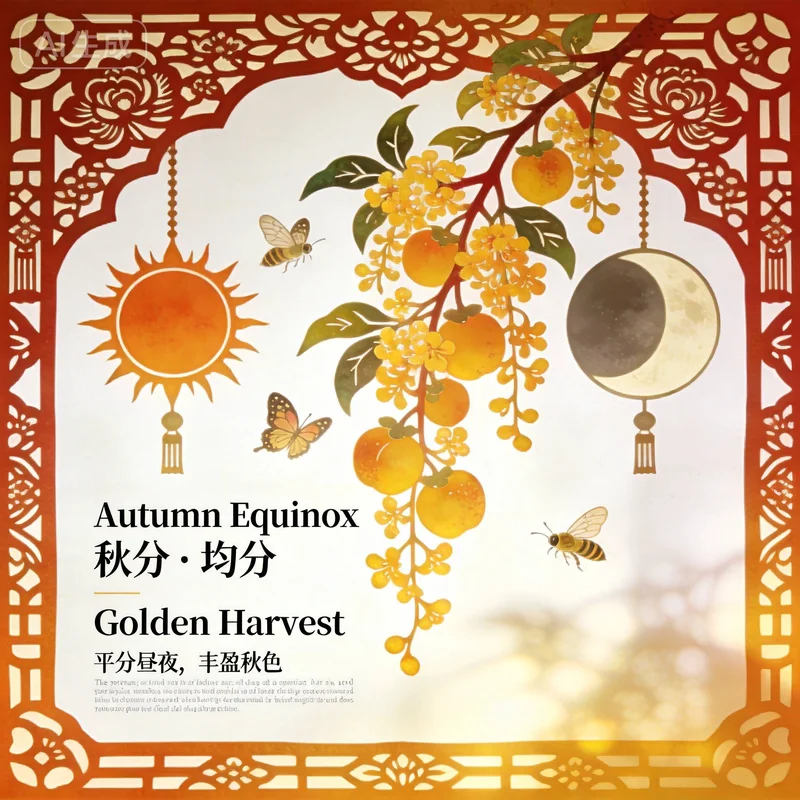
Autumn Equinox

Autumn Equinox

Sep 23

Cold Dew

Cold Dew

Oct 8

Frost Descent

Frost Descent

Oct 23

Winter · 冬

Start of Winter

Start of Winter

Nov 7

Minor Snow

Minor Snow

Nov 22

Major Snow

Major Snow

Dec 7

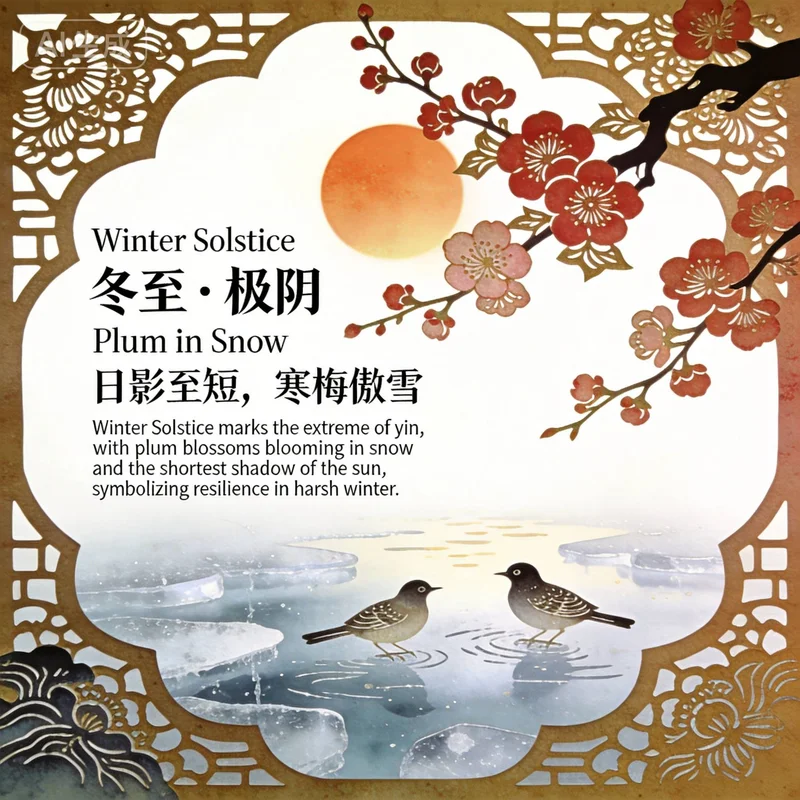
Winter Solstice

Winter Solstice

Dec 21

Minor Cold

Minor Cold

Jan 5

Major Cold

Major Cold

Jan 20

How to find the current Chinese solar term

  1. 1

    Open the 24 Solar Terms page — the current term and countdown to the next term are displayed automatically.

  2. 2

    Read about the current term — learn what this solar term means in the agricultural calendar.

  3. 3

    Check the next term — see how many days remain until the next solar term begins.

Frequently Asked Questions

What are the 24 Chinese solar terms?
The 24 solar terms (节气) divide the solar year into 24 segments of approximately 15° of the Sun's ecliptic longitude. They originated in ancient China for agricultural timing and are still observed across East Asia today.
How are the solar term dates calculated?
We calculate the exact moment when the Sun reaches each 15° increment of ecliptic longitude using Jean Meeus' astronomical algorithms (VSOP87 truncated). The accuracy is ±5 minutes for the years 1900–2100.
Is there a fixed date for each solar term?
No. While they fall roughly on the same Gregorian dates each year (e.g., Start of Spring around Feb 3–5), they shift slightly due to leap years. Our tool computes the exact date for the current year.
Are these the same as Western zodiac signs?
Both systems use 12 divisions of the year, but they are different. Solar terms divide the year by the Sun's ecliptic longitude (15° per term), while Western zodiac signs are based on constellations. Solar terms are seasonal/agricultural, not astrological.


How Countdown Calculations Work

What Is a Julian Day?

The Julian Day Number (JDN) is a continuous count of days since January 1, 4713 BC. Astronomers use it to simplify date arithmetic — you subtract two JDNs to get the exact number of days between any two dates, no calendar quirks to worry about.

USNO Reference

What Are Solar Terms?

The 24 solar terms divide the year by the Sun's position along the ecliptic. Each term spans exactly 15° of celestial longitude. They are a lunisolar calendar system distinct from the lunar month system, used for agriculture in East Asia for over 2000 years.

Wikipedia

How Is Easter Calculated?

Easter Sunday is determined by the Computus — a set of rules that finds the first Sunday after the first full moon on or after the March equinox. Butcher's Algorithm (1876) computes it with pure integer arithmetic, valid for all Gregorian years.

Butcher's Algorithm

Meteor Shower Calendar

Meteor showers occur when Earth passes through debris trails left by comets. The International Meteor Organization (IMO) publishes an annual calendar of peak dates. Major showers like the Perseids and Geminids are reliable year after year.

IMO Calendar

Discover which of the 24 Chinese solar terms we are in right now, and count down to the next one. Based on Sun ecliptic longitude calculation (Jean Meeus algorithm). Free, browser-based. · All calculations execute client-side — zero network requests, zero data transmitted. Solar term dates computed via astronomical algorithms in your browser.